As of November 2026 · Officine
Furniture trends 2027 for manufacturers. What the fairs show, and what you can do with it.
I follow the fairs and the trade press because my work is turning trends into products that sell. For this overview I read reports from the Salone del Mobile, 3daysofdesign, Proposte, Heimtextil, Orgatec, interzum and Maison&Objet, and trade titles from the Netherlands, Italy, Denmark, Germany and the UK. It is not a trend book but a selection: what matters to a manufacturer, and what you can do with it.
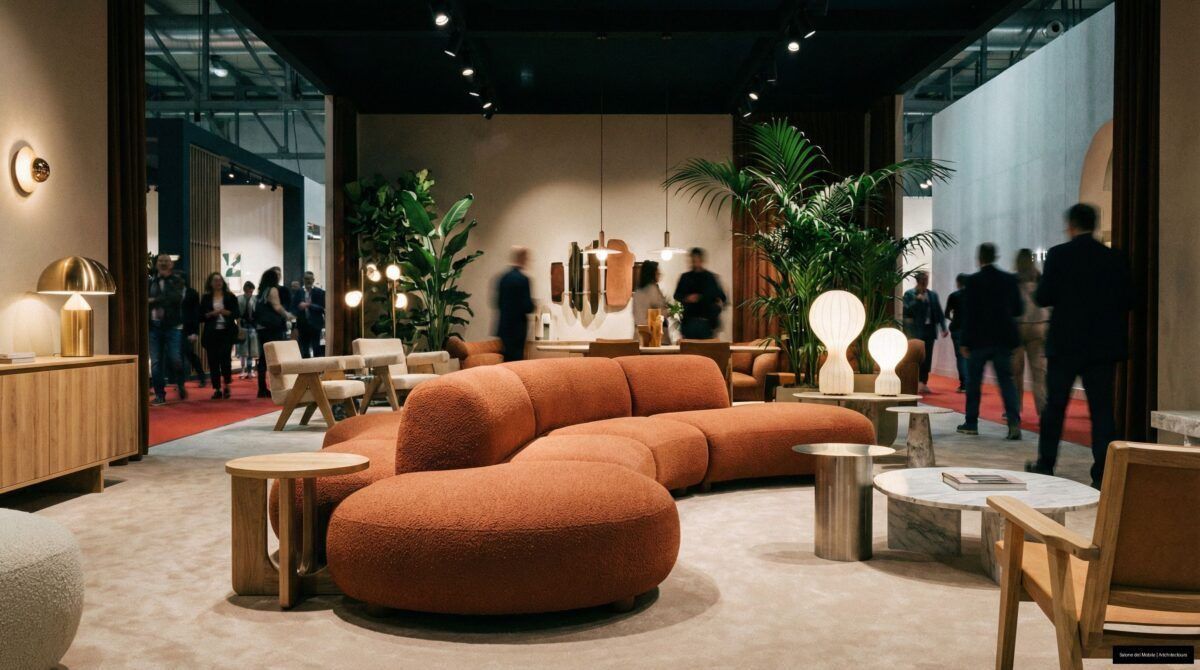
The big picture
2027 will not bring one new style that takes over everything. The trend agencies in Paris and Frankfurt say rather the opposite: contrasts are allowed to coexist. Ambiente calls it Coexistence; Peclers puts the exuberant and the restrained side by side. What does disappear is the interior that looks like a showroom: everything matched, everything finished.
Forecaster Li Edelkoort sums up 2027 as: every room will be a living room. After the kitchen, the bathroom and the garden come the hallway, the walk-in closet and the hobby room. At fairs like Orgatec you see the same happening to the office and the lobby. For a manufacturer, that is the key shift: the line between residential and contract is fading.
Six trends for manufacturers
-
1. Soft, with a hard edge
What we see
After years of ultra-soft, rounded sofas, structure is coming back. In Milan, lacquer appeared as a glossy, structural element in upholstered furniture, at Tacchini, Frigerio, Molteni&C and Living Divani among others. In Copenhagen, Vipp and Mesura built a sunken conversation pit from a modular sofa, and Verpan showed Verner Panton's continuous Welle seating. Modular systems are getting longer and freer: Trace Modular by Secolo and Tableau runs up to ten metres.
What you can do with it
A lacquered base, side panel or back shell gives an existing seating programme a new face without a new product. And if you work modularly, you can extend the system with corner, end and connecting elements that form one landscape. That landscape works in the living room and in the hotel lobby.
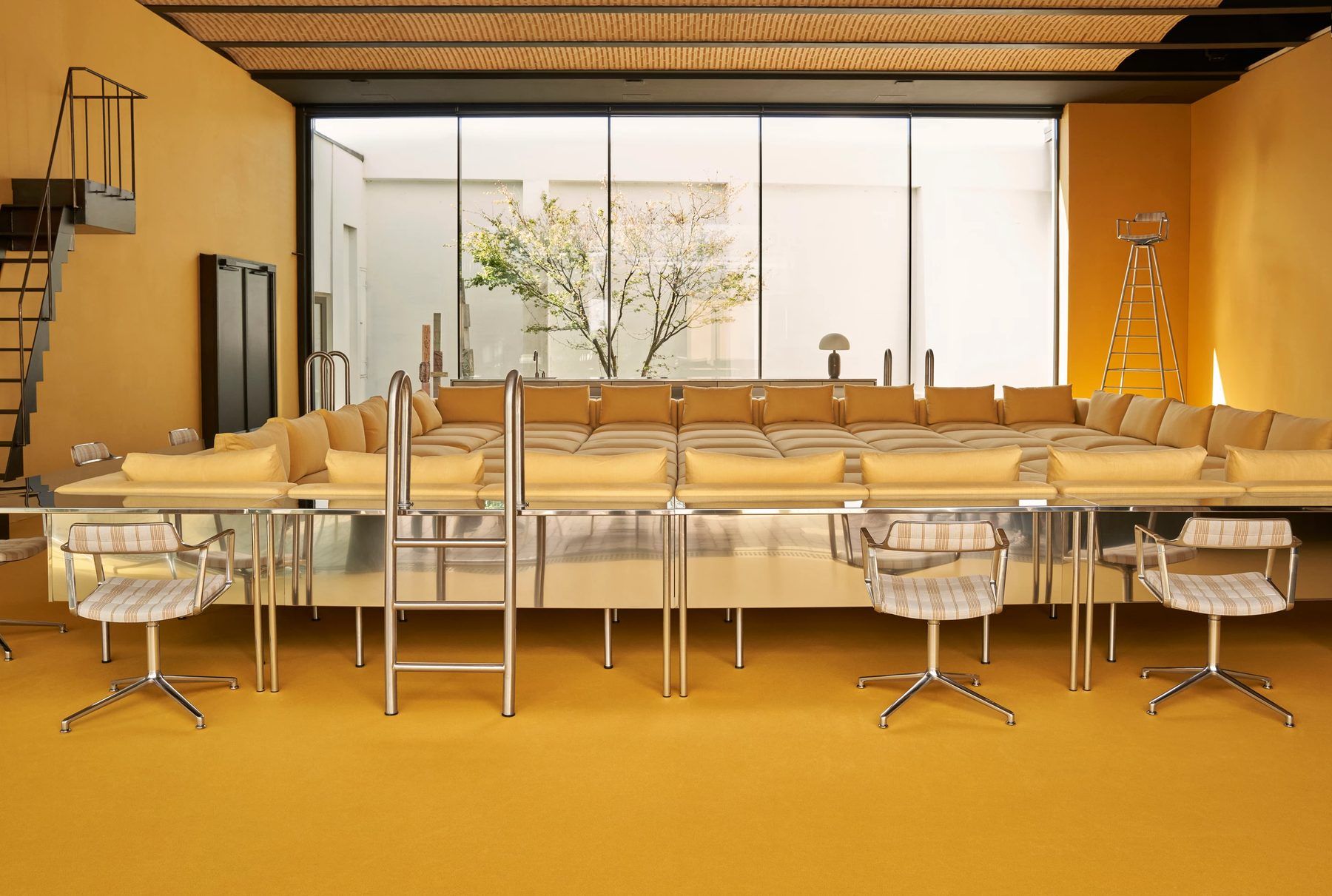
Vipp × Mesura · 3daysofdesign 2026 -
2. Colour is in the construction
What we see
The trade press sees no single trend colour, but a direction: away from greige, towards soft greens as a base. Dulux chose Soulful Sage as its colour for 2027. Next to that come strong accents: wine-red marble, pink and buttercup yellow. Heimtextil works with three palettes: cool and technical, industrial dark, and warm and earthy. And colour increasingly sits in the material itself, in lacquer, stone and metal, not only in the fabric.
What you can do with it
Review your fabric range: a base of soft green, complemented by wine red, a warm earthy block and one outspoken accent colour. Add a wool quality, and an archive pattern or check. Also look at where colour can go into the construction, so a collection becomes recognisable without the customer having to choose upholstery.
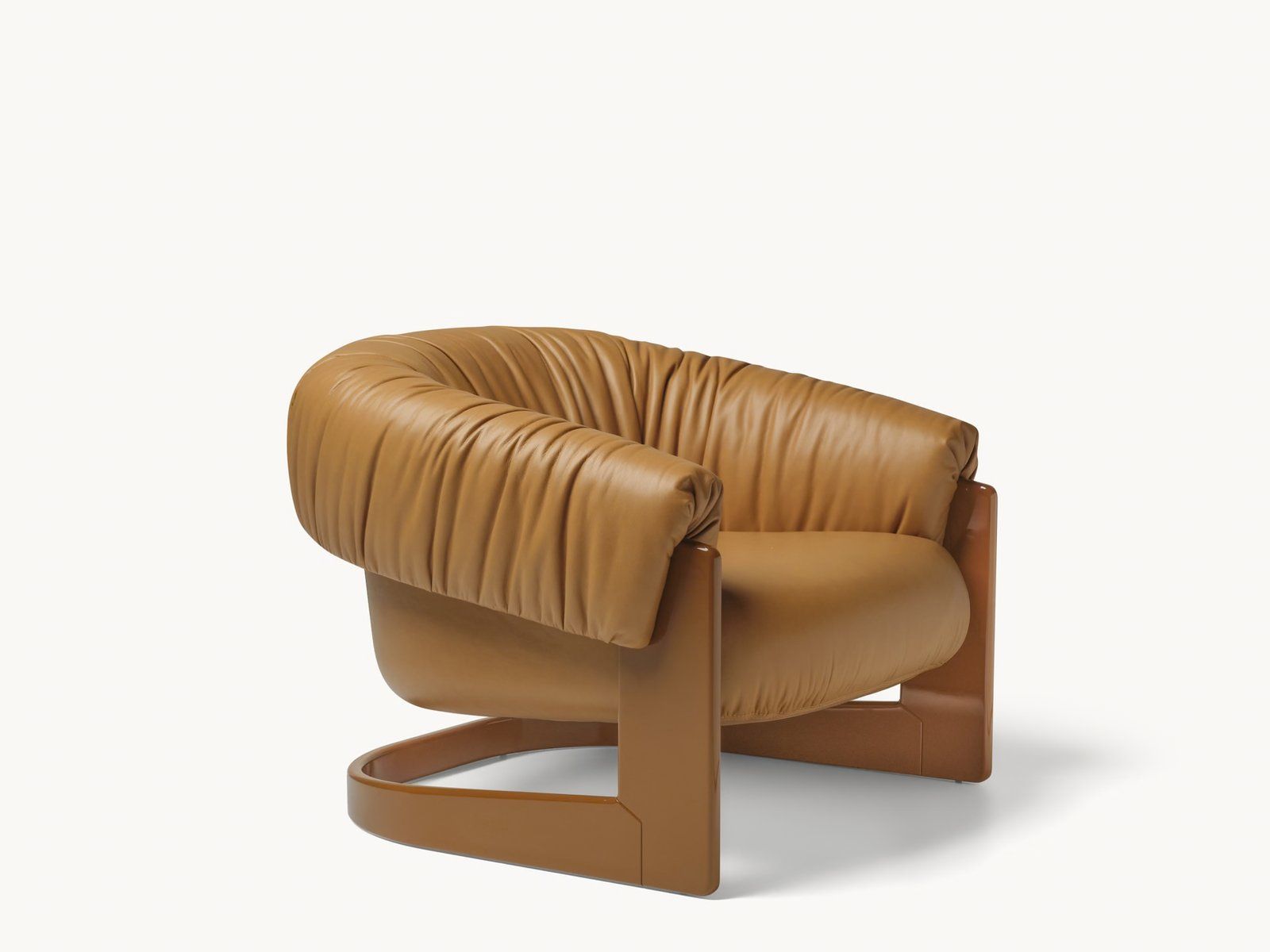
Visionnaire · Hampshire -
3. The base as signature
What we see
In tables and chairs, the base defines the design. In Milan, B&B Italia showed Abaco by Ronan Bouroullec, Flexform the brutalist Tara by Sebastian Herkner, and Baxter the Zaho in marble. Tubular steel and cantilevers are back, as reissues and new variants. In outdoor furniture, materials and finishes increasingly match those used indoors.
What you can do with it
One recognisable base can carry a whole family: dining table, coffee table, side table, perhaps a sofa. That is good for brand recognition and for production. And if the frame can also go outside, with weather-resistant fabric and removable covers, you have one line for indoors and out.
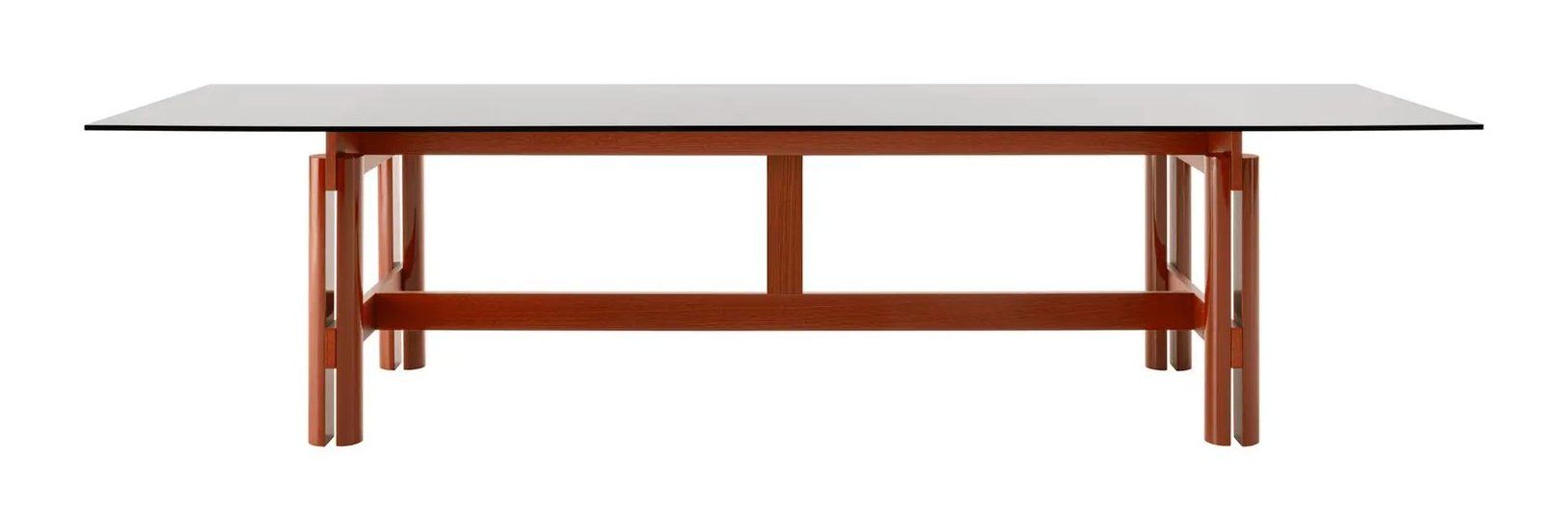
B&B Italia · Abaco, Ronan Bouroullec -
4. Contract that feels like home
What we see
In 2026 Orgatec had a central theme for the first time: From Rooms to Relationships. Offices are getting warmer and more domestic, with large, organically curved seating landscapes, warm wood and more colour. Acoustics and privacy remain important, in phone booths and semi-enclosed seating. Vitra shows how to make one product for both markets: the Anagram sofa got a contract version that is more compact, upright and sturdy, for lobbies, libraries and hotels.
What you can do with it
A residential line with a contract version opens two markets with one design. And performance fabrics (flame-retardant, hard-wearing, easy to clean) are no longer just a contract story. If you can prove that for residential too, you have an argument towards retail.
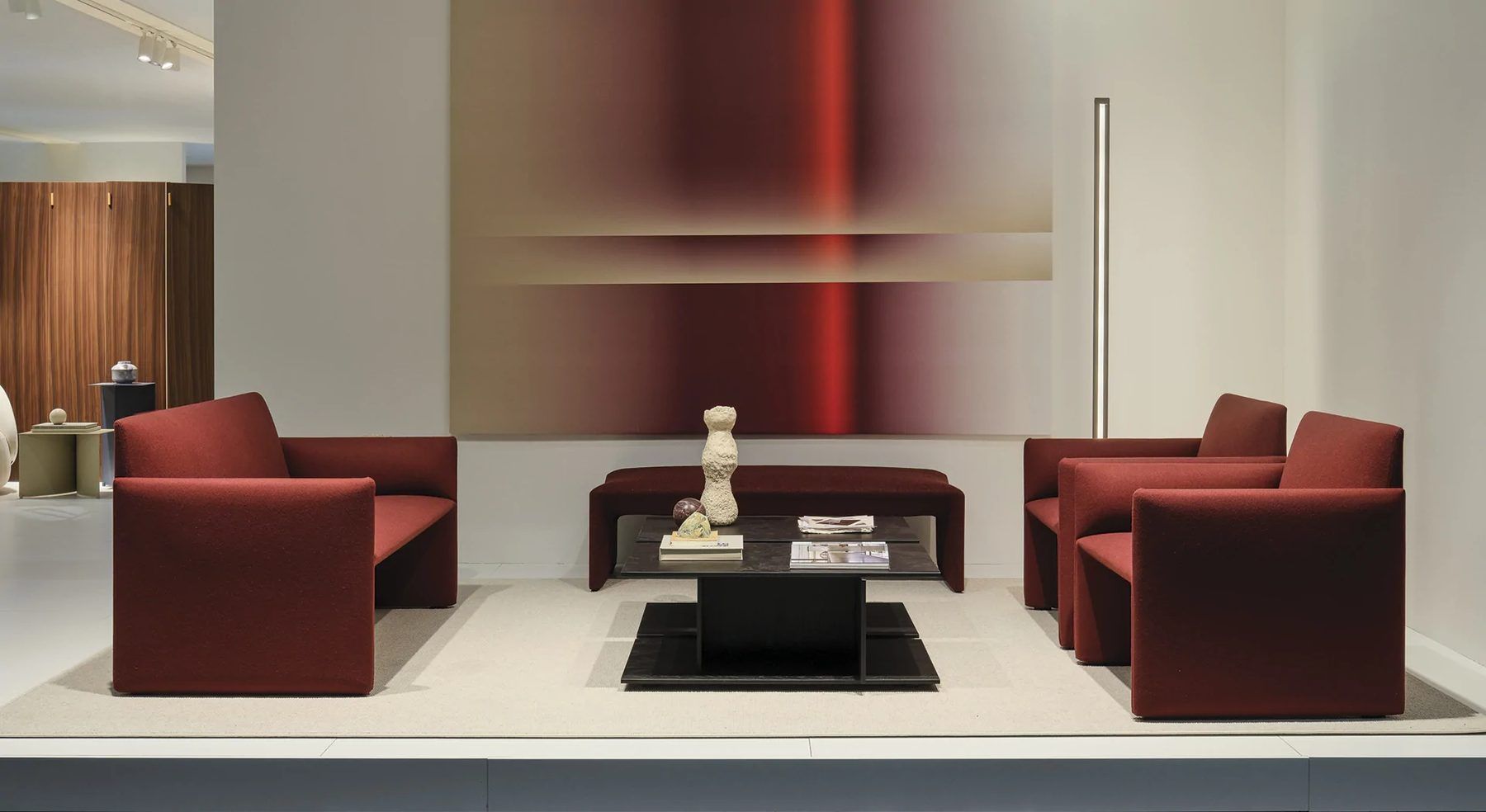
Orgatec 2026 -
5. Design for disassembly
What we see
The supply industry is working hard on circularity. Vitra and BASF developed V-Foam, a PU foam that can be recycled economically. There is MDF made from old MDF, chipboard with 70 percent recycled content, linoleum as a furniture surface and edge banding without fossil raw materials. At interzum and at the fair in Guangzhou the direction is the same: less material, waste as raw material, and furniture that comes apart. The European Commission is planning a digital product passport for furniture, with sector requirements around 2028.
What you can do with it
Removable covers, no glue, recyclable foam and replaceable parts are becoming tender requirements. Record now which materials, joints and spare parts are in your products. You will need it for the passport, and it is already an argument towards architects and buyers today.
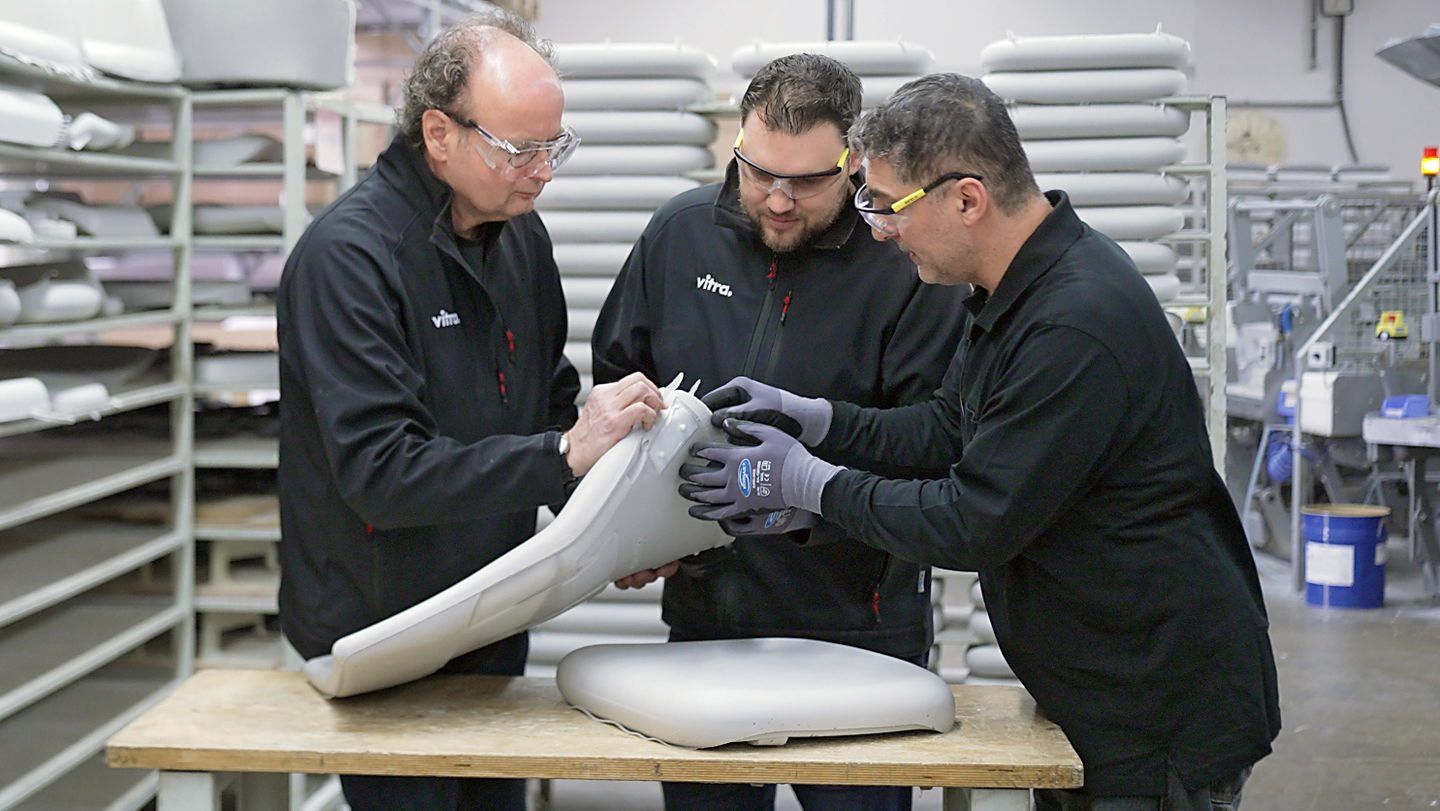
Vitra · V-Foam -
6. Provenance as brand story
What we see
At Proposte, the textile fair on Lake Como, the talk was of traceability, wool, moving away from PFAS and local sourcing. Fritz Hansen and Muuto want to use wood with knots and colour variation too, because according to them the industry rejects around 80 percent of its wood. Natural fibre, provenance and craftsmanship are winning awards.
What you can do with it
PFAS-free, traceable fibres, wood that is allowed to show its character: all valuable, but it only sells when you tell it. That is brand work, not just product work. A manufacturer who can show where things come from has a story a competitor cannot copy.
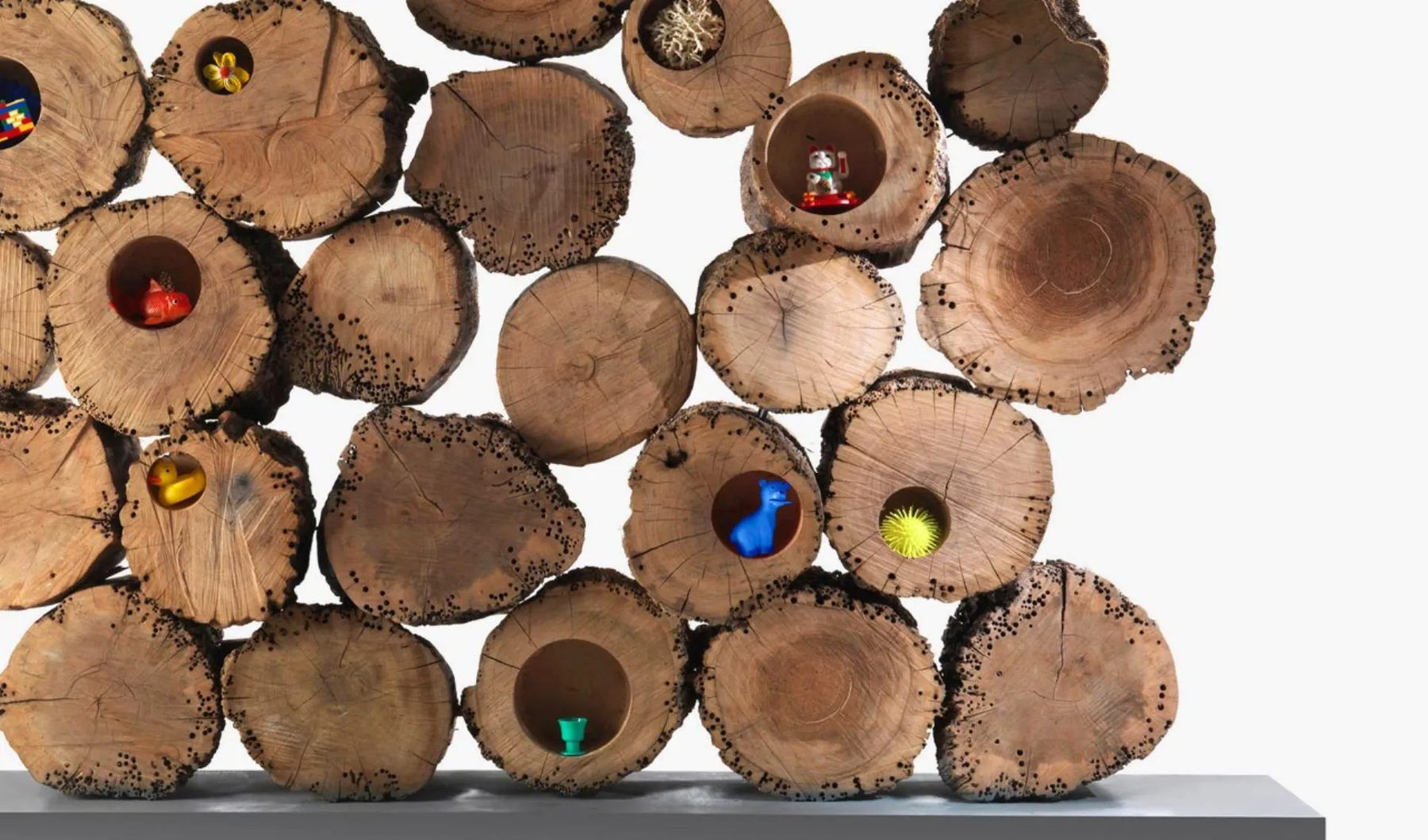
Riva 1920
Style directions at a glance
The names the trend agencies on the continent use to describe 2027. Useful as a shared language with designers, stylists and dealers.
- Peclers Paris
High Minimal
Minimalism with tangible quality and real materials, instead of visual effect.
- Peclers Paris
Restful
Softness, emotion and usefulness in everyday objects.
- Ambiente 2027
structural + emotive
Minimal but not cold, with empty space as a design tool and fragrant wood.
- Ambiente 2027
noble + fancy
A contemporary cabinet of curiosities, classic and eclectic, with furniture as statement.
- Maison&Objet
Revisited Baroque
Baroque theatricality, refined by young craftspeople.
- Maison&Objet
Neo-Folklore
Regional traditions, made with digital techniques.
From trend to collection
Reading trends is one thing. What comes next is translating them through your own identity.
Not every trend suits every brand. The question is which trends fit your factory, your craft and your customers, and how to use them without losing what makes you recognisable. That is what I help manufacturers with: from factory to brand, and from brand to factory.
This is a summary. The full report, with colour and fabric palettes, material innovations, contract trends and what designers say, is available on request.
I'll only use your details to follow up on the report.
Sources
- Netherlands
- FrameVosges Paris (Orgatec 2026)MaterialDistrict
- Italy
- designboom (Proposte, 3daysofdesign)IFDMDesignDiffusion
- Denmark
- Scandinavian MIND
- UK
- Wallpaper*Dezeen (Soulful Sage, V-Foam)Workplace Insight
- Switzerland
- Vitra (Anagram Club)